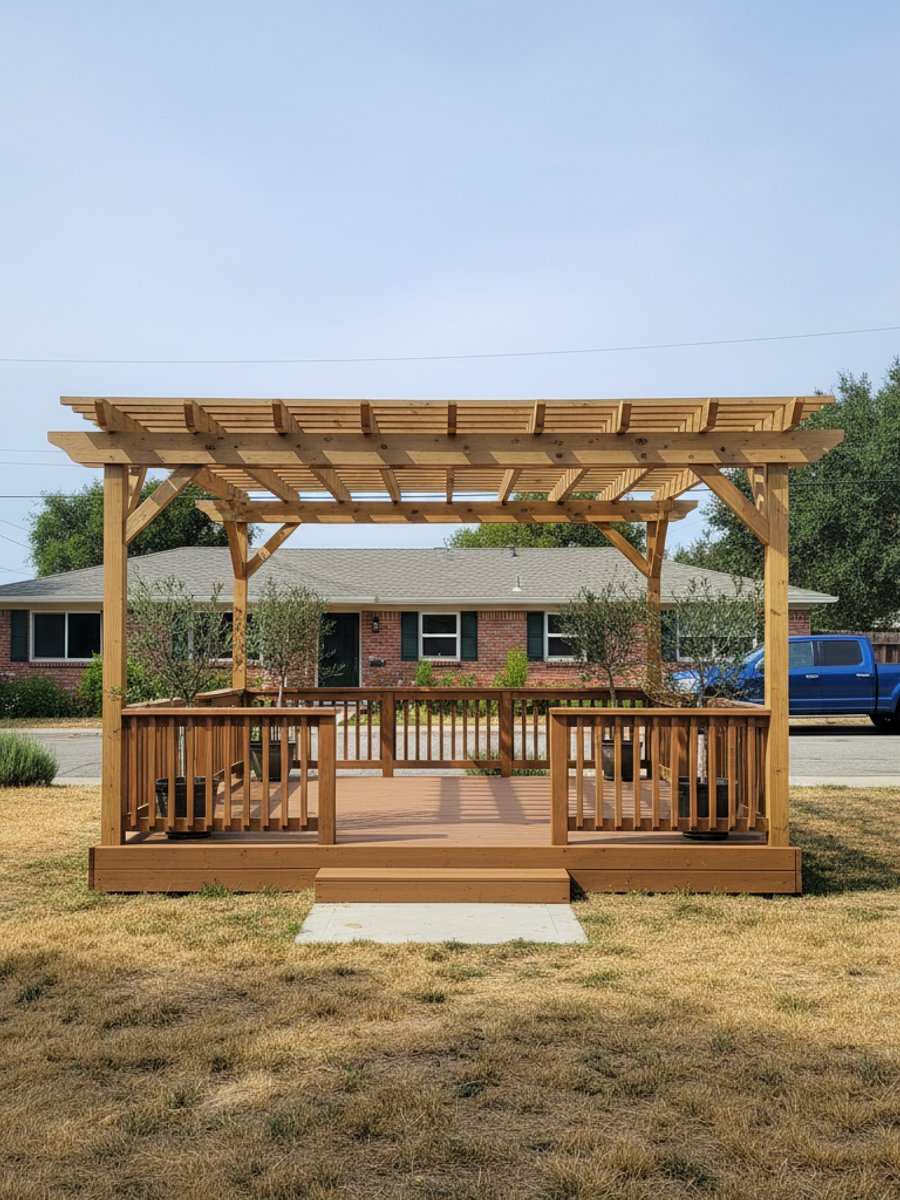
People ask us if there's a bad month to build a deck in Long Beach. There isn't a terrible one, honestly, not like you'd get in a place with real winters. But there are better windows, and they come down to moisture, sun, and when the city can get out to inspect your footings.
Long Beach doesn't have seasons, but your deck still feels them
We don't get freeze-thaw cycles here. A post hole in Minneapolis has to worry about frost heave, ours doesn't. What we deal with instead is the marine layer, the dry season, and the Santa Ana winds, and each one does something specific to a deck build.
May and June bring what everyone around here calls May gray and June gloom, a low marine layer that burns off by early afternoon most days but keeps the morning air damp. That's fine for framing. It's not great for staining, because an oil-based or semi-transparent stain needs the wood dry to the touch and ideally under 15% moisture content to take properly. Spray a deck down at 7am in June and you're fighting condensation the whole job.
Fall is usually our best stretch. September through November, the Santa Anas start kicking in, hot dry wind off the desert, humidity drops into the teens and twenties. Stain cures fast and even. Framing lumber that got rained on in March has had all summer to dry out. If I had to pick one season to recommend for staining and sealing specifically, it's fall, hands down.
Rain is rare here, which makes it more dangerous to plan around
Long Beach gets maybe 12 inches of rain a year, almost all of it between December and March. Because it's rare, a lot of homeowners figure it doesn't matter when they schedule. The problem is that when it does come, it tends to come in a real system, an atmospheric river that dumps 2 or 3 inches in a couple of days, not a gentle drizzle. You do not want wet footings sitting open the night before one of those. We watch the forecast closely for any pour scheduled January through March, and we'll push a footing pour a few days rather than fight a backfilled hole that's turned to soup.
On the other hand, a deck that's already built handles our rain fine, it's one of the mildest wet seasons in the country. The bigger risk in winter isn't the deck itself, it's open framing sitting uncovered for weeks waiting on an inspection slot.
What the ground actually does under a deck footing
Closer to the water, Bixby Knolls, Belmont Shore, the Peninsula, you're mostly in sandy fill, which drains fast and compacts predictably, good news for a footing. Move inland toward Lakewood or parts of North Long Beach and you start hitting more clay content, which swells when wet and shrinks when dry, the kind of soil that can shift a post base over a few years if the footing isn't deep enough or wide enough.
Most residential deck footings here go down 18 inches or more, not for frost protection like you'd see back east, but to get past loose fill and reach soil that can actually bear the load without settling. On a clay lot we'll sometimes go wider on the footing diameter rather than deeper, to spread the load and reduce the chance of heave. None of this changes drastically by season, but a footing poured in the dead-dry part of September behaves differently than one poured into wet clay in February, and we adjust cure time and backfill compaction accordingly.
Permits don't care what month it is, but timelines shift anyway
Any deck over 30 inches off grade in Long Beach needs a permit through the city's Development Services department, and most lower decks attached to the house do too once you're adding a structure to the building. The process is the same year-round: plan check, a footing inspection before you pour, a framing inspection before the decking goes down, sometimes a final once railings are in. What changes seasonally is how fast you get an inspector out. Spring and early summer are busy for every contractor in this city, so inspection slots book out further. Late fall and winter, outside of the holidays, tend to move faster simply because fewer people are pulling permits.
If your lot backs up to an alley or you're near a setback line, a quick property line check before design saves a redesign later, especially on the older, narrower lots in neighborhoods like Rose Park or Bluff Park where the house sits close to the rear property line already.
Older streets versus newer subdivisions
A lot of Long Beach's housing stock, Belmont Heights, Wrigley, Rose Park, California Heights, went up in the 1920s through the 1940s. A deck on one of these lots often means tying into a ledger board on a house with old stucco or redwood siding, and sometimes finding the original rim joist isn't in great shape once we open it up. That's structural repair work that has nothing to do with the calendar, but it's worth knowing going in that an older house adds an extra day or two for framing surprises no matter what month you start.
Newer construction, out toward El Dorado Park or some of the Eastside subdivisions, usually gives you a cleaner ledger attachment and known framing, which makes the build itself faster regardless of season.
So when should you actually book it
If you're building new or replacing framing, late summer into fall gets you dry ground, fast inspection turnaround once the summer rush dies down, and good curing weather for any concrete. If the job is staining, resealing, or refinishing existing boards, fall is close to ideal, low humidity, mild temperatures, no marine layer fighting the stain. If it's composite decking, timing matters less for the material itself, but we still avoid installing on the hottest afternoons in August since composite boards expand with heat and the gap spacing between boards has to account for that or you'll see buckling come winter.
Winter and spring aren't off the table, they're just a little less forgiving if the weather doesn't cooperate on the one week it matters. We build and repair decks here all year at Majestic Deck Company, and we'll tell you honestly if your timeline needs to flex around a storm system or an inspector's schedule rather than just telling you what you want to hear.