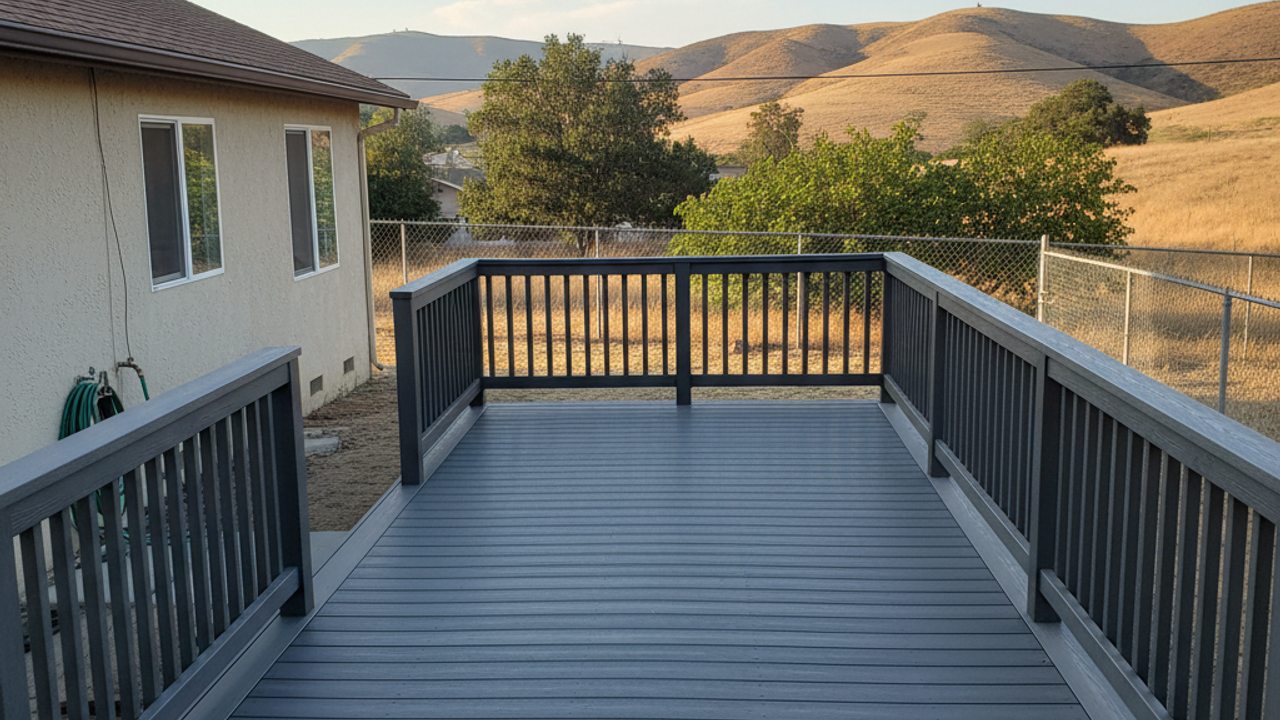
A deck is a structure hanging off your house, usually eight feet or more in the air, holding up a barbecue and a dozen people at a party. Most homeowners never think about what's under the boards until something moves that shouldn't. Picking the right builder matters more here than the price on the bid, and Long Beach has its own reasons why.
Start with the ledger board
The ledger is the piece bolted to your house that the whole deck hangs from. If it's attached wrong, everything above it is only as strong as that one connection. A builder who knows what they're doing lags or through-bolts the ledger into the rim joist or studs, not just the siding, and flashes it so water running off the deck can't get behind it and rot the wall sheathing. Long Beach doesn't get freeze-thaw, but it does get salt air off the coast in Belmont Shore, Naples, and the Peninsula, and that air corrodes fasteners faster than people expect. Ask what hardware they're using. Hot-dip galvanized is the minimum near the water. Stainless is better and worth the extra cost within a mile or two of the ocean.
Ask how they handle seismic bracing
Long Beach sits close to the Newport-Inglewood fault, and any deck attached to a house here is a lateral load problem as well as a vertical one. Code requires hold-down hardware or lateral load connectors at the ledger in a lot of configurations, not just lag screws every 16 inches. A builder who's done work here should bring this up without you asking. If they look confused when you mention seismic connectors, that's worth noting.
Permits aren't optional past a certain height
In Long Beach, a deck more than 30 inches above grade at any point generally needs a building permit through the city's Development Services department, and it gets inspected, usually at footing, framing, and final stages. A lot of the older lots in Wrigley, Rose Park, and California Heights are narrow, so setback from the property line matters too, especially if the deck wraps a side yard. A builder who tells you "we'll just skip the permit, nobody checks" is putting the risk on you, not them. If you ever sell the house, an unpermitted deck can hold up escrow or cost you money at inspection. Ask to see a permit pulled under their name or license number, not yours.
What the footings need to survive
Soil in Long Beach varies block to block. Closer to the water it's sandy and drains fast. Further inland, in older neighborhoods like Bixby Knolls or Los Cerritos, you get more silt and clay mixed into old alluvial fill, which holds water and shifts more under a footing. A post footing here typically needs to go down at least 12 to 18 inches below grade, sometimes deeper if an inspector calls for it based on soil conditions or deck height. A contractor who quotes footings without ever asking about your soil, or without pulling a permit that would trigger an inspection of those footings, is guessing. Undersized or shallow footings are one of the most common reasons a deck starts to lean or bounce five or ten years in.
Wood versus composite, and what actually fails
Redwood and cedar still look good on a lot of Long Beach decks, and they're a reasonable choice if you're willing to reseal every one or two years. The sun here is intense almost year-round, and UV breaks down wood fibers and finish coatings faster than people expect from a place with no real winter. Composite decking skips the yearly staining, but it's not maintenance-free. It expands and contracts with heat more than people think, so spacing between boards matters, and cheap composite can fade or streak faster in direct coastal sun than the brochure suggests. Either material fails the same way if the framing underneath is undersized: joists spaced too far apart, or a beam sized for a shorter span than what it's actually carrying. That's a framing problem no amount of decking material fixes.
Red flags worth walking away from
- No license number they can give you on the spot, or a license that isn't for the right classification.
- No mention of a permit, ever, even for a deck clearly taller than 30 inches.
- A bid with one lump number and no breakdown of footings, framing lumber, fasteners, or decking material.
- Pressure to pay most or all of the cost upfront, before materials are even delivered.
- No proof of workers' comp insurance. Deck work involves ladders, saws, and framing at height, and if someone gets hurt on your property without coverage, that liability can land on you.
None of this means you need the most expensive quote you get. It means you need someone who can answer these questions without hesitating, because they've had to answer them for an inspector before.
What a solid bid actually includes
A written scope that names the lumber grade or composite brand, the fastener type, footing depth, and whether permitting is included in the price. A rough timeline, since a straightforward deck install usually runs one to three weeks depending on size and inspection scheduling, longer if it's a covered deck or pergola with its own structural load. And a clear answer on cleanup and demolition of the old deck if there is one. If a company can walk you through all of that before they've even started digging, that's usually a good sign about how the rest of the job will go. That's the standard we hold ourselves to at Majestic Deck Company, and it's a fair standard to hold any builder to before you sign.